
- Improving
- Tips
Winter is coming

Six simple tips to cut your heating bills
September is the time of year when evenings get noticeably cooler and you start thinking about putting the heating back on. Unfortunately, this autumn that will coincide with another rise in energy bills.
From October, Ofgem’s energy price cap is increasing by 4%, taking the typical annual dual-fuel bill from £1,663 to £1,723.
The obvious response is to turn down the thermostat or leave the heating off for longer. But according to property expert Cal Graham of We Buy Any Home, there are a number of other less obvious ways you could cut wasted energy without making your home noticeably colder.
He says a surprising amount of energy can be wasted through overlooked boiler settings, radiators heating rooms that are barely used and small draughts around the home.
Here are six things you should check before the colder weather arrives.
1. Check your boiler’s preheat setting
Many combi boilers have a setting called ‘preheat’, ‘comfort’ or ‘warm start’. It keeps a small amount of water hot so that you don’t have to wait quite as long for hot water to reach the tap.
Convenient, certainly, but it can mean your boiler using gas throughout the day even when you don’t need hot water. Switching to an ‘eco’ setting can prevent this, although you may have to wait slightly longer for the water to heat up. Check the manufacturer’s instructions before making changes.
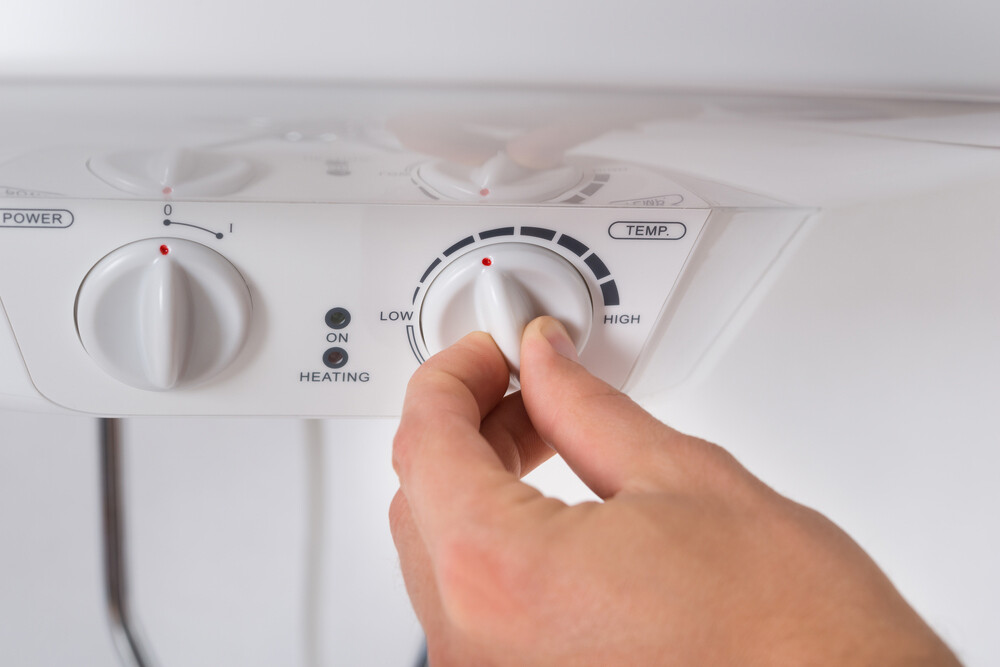
2. Turn down your boiler flow temperature
This is easily confused with the temperature on your thermostat, but the two are quite different. Boiler flow temperature determines how hot the water is when it leaves the boiler and travels around your radiators.
Many condensing combi boilers are set at 70°C or 80°C, but reducing this to around 60°C could help them work more efficiently. Your home may take slightly longer to warm up, and the best setting will depend on your boiler, property and the weather, so check the guidance for your particular model.
3. Check your hot-water temperature
Some combi boilers have a separate control for the temperature of water going to your taps and shower.
If the water is being heated to a much higher temperature than you actually use, only to be mixed with cold water at the tap, there may be scope to reduce it.
However, don’t do this if you have a stored hot-water cylinder without taking professional advice. These generally need to remain at 60°C to control potentially harmful bacteria.
4. Don’t heat empty rooms unnecessarily
Thermostatic radiator valves allow you to control individual rooms, yet it is easy to leave every radiator at the same setting.
Spare bedrooms and other rooms you rarely use probably don’t need to be as warm as your living room. Turning the valve down by a setting can reduce the amount of heat being used without allowing the room to become completely cold.
And that last point matters. During very cold weather, turning heating off altogether in unused rooms can increase the risk of damp and frozen pipes.
5. Use radiator reflectors selectively
Radiator reflector panels are designed to send heat back into the room rather than allowing some of it to disappear into the wall behind.
They make most sense behind radiators mounted on uninsulated external walls. Putting them behind radiators on internal walls offers much less benefit, so there is little point fitting them indiscriminately throughout your home.
6. Hunt down hidden draughts
Windows and external doors are the obvious culprits, but they aren’t the only places where warm air escapes.
Loft hatches, unused chimneys, letterboxes, keyholes, cat flaps and gaps around floorboards can all create draughts. On a cool, windy day, simply walking around your home and feeling for unexpected currents of cold air can reveal where heat is being lost.
Many gaps can be dealt with cheaply using draught-proofing products, but permanent ventilation should never be blocked. Air bricks, trickle vents and boiler flues are there for good reason.
Overall, though, the aim isn’t necessarily to use less heating, but to make sure you aren’t paying for heat that you never actually feel.