- Improving
- Tips
Warning! DIY is not only hazardous, it can also devalue your home

We are approaching what is traditionally the peak time of year for DIY, with as many as 71% of the adult population doing jobs around the house during the Easter break. If you’re planning on doing so yourself, be careful, because it can easily turn into a disaster, reducing the value of your home and/or result in serious injury.
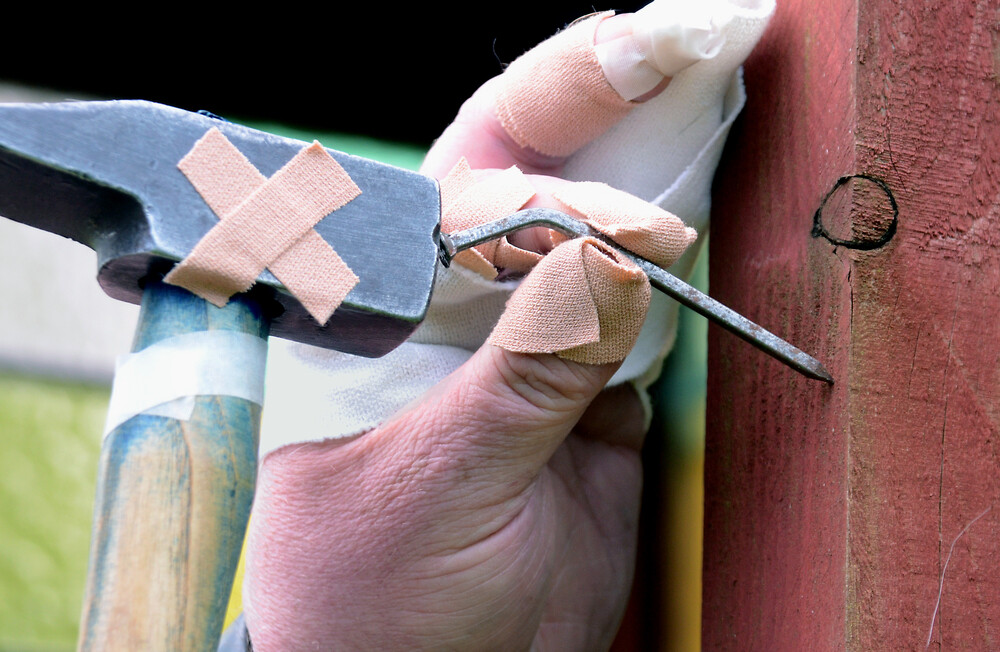
Unfortunately, we have a rather gung-ho approach to DIY. We undertake all sorts of tasks for which we have no knowledge or experience and these are two of the biggest risk factors, according to Axa Insurance. 220,000 people a year end up in hospital as a result of DIY injuries (ROSPA). Things come to a head on Easter Monday, with claims soaring by up to 29%. These are not minor accidents either, the average payout is around £500. The top five insurance claims include:
1. Spilt paint or varnish
2. Broken furniture
3. Accidental holes in walls and ceilings
4. Water leakage/broken pipes
5. Fire damage
It is possible to do some DIY without burning the house down or ending up in hospital. But, if it’s a job you haven’t done before, do some homework first and find out whether it’s within your capabilities. There are some jobs that you should never attempt to tackle.
Electrics are an area where, although a frightening number of you are happy to try your hand at it, it’s best left to the professionals. Electricians should be Part P registered with one of the following, Nappit, NICEIC, ELECSA, BRE, BSI, ECA.
If you are still determined to have a go, these statistics should put you off – there are 10 deaths, 750 serious injuries and 10,000 fires each year as a result of unsafe electrics.
Gas is something else you should never attempt to tackle, as the consequences of incorrect work can be very serious indeed. Anybody fitting, fixing or replacing a gas appliance such as cookers, fires or boilers should be registered with GasSafe, (which has replaced Corgi).
Plastering isn’t particularly dangerous, but is a highly skilled job and any DIY attempts are invariably disastrous. The problem is that when you see a professional do it, they make it look so easy. It isn’t. It takes years and years of practice.
Some plumbing jobs are relatively straightforward, but getting it wrong can be very wet and very expensive (see point 4 opposite if you don’t believe me). If you don’t know what you are doing, it’s better (and cheaper) to leave it to a professional.
Despite all the pitfalls, when done well, DIY can enhance the value of your house. Additional storage and shelving is always welcome, as is some fresh paint or shiny new tiles, but it must look like it has been done by a professional, otherwise it could do more harm than good. Most surveys point to botched or unfinished DIY jobs as one of the biggest turn-offs when looking for a new home.